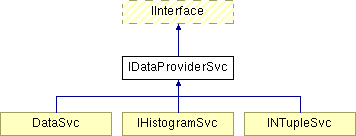
#include <GaudiKernel/IDataProviderSvc.h>
Inheritance diagram for IDataProviderSvc:
Public Types | |
| enum | Status { IID_IDataProviderSvc_NO_ERROR = 1, DOUBL_OBJ_PATH, INVALID_OBJ_PATH, INVALID_ROOT, INVALID_OBJECT, INVALID_PARENT, OBJ_NOT_LOADED, NO_DATA_LOADER, INVALID_OBJ_ADDR, DIR_NOT_EMPTY, NO_MORE_LEVELS, LAST } |
| Status code definitions. More... | |
Public Methods | |
| virtual StatusCode | registerObject (const std::string& fullPath, DataObject* pObject) = 0 |
| Register object with the data store. More... | |
| virtual StatusCode | registerObject (const std::string& parentPath, const std::string& objectPath, DataObject* pObject) = 0 |
| Register object with the data store. More... | |
| virtual StatusCode | registerObject (const std::string& parentPath, int item, DataObject* pObject) = 0 |
| Register object with the data store. More... | |
| virtual StatusCode | registerObject (DataObject* parentObj, const std::string& objectPath, DataObject* pObject) = 0 |
| Register object with the data store. More... | |
| virtual StatusCode | registerObject (DataObject* parentObj, int item, DataObject* pObject) = 0 |
| Register object with the data store. More... | |
| virtual StatusCode | unregisterObject (const std::string& fullPath) = 0 |
| Unregister object from the data store. More... | |
| virtual StatusCode | unregisterObject (const std::string& parentPath, const std::string& objPath) = 0 |
| Unregister object from the data store. More... | |
| virtual StatusCode | unregisterObject (const std::string& parentPath, int item) = 0 |
| Unregister object from the data store. More... | |
| virtual StatusCode | unregisterObject (DataObject* pObject) = 0 |
| Unregister object from the data store. More... | |
| virtual StatusCode | unregisterObject (DataObject* pParent, const std::string& objPath) = 0 |
| Unregister object from the data store. More... | |
| virtual StatusCode | unregisterObject (DataObject* pParent, int item) = 0 |
| Unregister object from the data store. More... | |
| virtual StatusCode | retrieveObject (IDataDirectory* pDirectory, const std::string& path, DataObject*& pObject) = 0 |
| Retrieve object identified by its directory entry. More... | |
| virtual StatusCode | retrieveObject (const std::string& fullPath, DataObject*& pObject) = 0 |
| Retrieve object identified by its full path from the data store. More... | |
| virtual StatusCode | retrieveObject (const std::string& parentPath, const std::string& objectPath, DataObject*& pObject) = 0 |
| Retrieve object from data store. More... | |
| virtual StatusCode | retrieveObject (const std::string& parentPath, int item, DataObject*& pObject) = 0 |
| Retrieve object from data store. More... | |
| virtual StatusCode | retrieveObject (DataObject* parentObj, const std::string& objectPath, DataObject*& pObject) = 0 |
| Retrieve object from data store. More... | |
| virtual StatusCode | retrieveObject (DataObject* parentObj, int item, DataObject*& pObject) = 0 |
| Retrieve object from data store. More... | |
| virtual StatusCode | findObject (IDataDirectory* pDirectory, const std::string& path, DataObject*& pObject) = 0 |
| Find object identified by its directory entry. More... | |
| virtual StatusCode | findObject (const std::string& fullPath, DataObject*& pObject) = 0 |
| Find object identified by its full path in the data store. More... | |
| virtual StatusCode | findObject (const std::string& parentPath, const std::string& objectPath, DataObject*& pObject) = 0 |
| Find object identified by its parent object and the path to the object relative to the parent. More... | |
| virtual StatusCode | findObject (const std::string& parentPath, int item, DataObject*& pObject) = 0 |
| Find object identified by its parent object and an integer identifier in the data store. More... | |
| virtual StatusCode | findObject (DataObject* pNode, const std::string& objectPath, DataObject*& pObject) = 0 |
| Find object identified by its parent object and the path to the object relative to the parent. More... | |
| virtual StatusCode | findObject (DataObject* parentObj, int item, DataObject*& pObject) = 0 |
| Find object identified by its parent object and an integer identifier in the data store. More... | |
| virtual StatusCode | updateObject (IDataDirectory* pDirectory) = 0 |
| Update object identified by its directory entry. More... | |
| virtual StatusCode | updateObject (const std::string& fullPath) = 0 |
| Update object identified by its full path in the data store. More... | |
| virtual StatusCode | updateObject (DataObject* toUpdate) = 0 |
| Update object identified by its pointer. More... | |
| virtual StatusCode | updateObject (const std::string& parentPath, const std::string& updatePath) = 0 |
| Update object identified by its parent's path and the path relative to the parent. More... | |
| virtual StatusCode | updateObject (DataObject* pParent, const std::string& updatePath) = 0 |
| Update object identified by its parent's pointer and the path relative to the parent. More... | |
| virtual StatusCode | updateRegistryEntry (IOpaqueAddress* pAddress, DataObject* pObj) = 0 |
| Update registry entry. More... | |
| virtual StatusCode | addPreLoadItem (const DataStoreItem& item) = 0 |
| Add an item to the preload list. More... | |
| virtual StatusCode | addPreLoadItem (const std::string& itemPath) = 0 |
| Add an item to the preload list. More... | |
| virtual StatusCode | removePreLoadItem (const DataStoreItem& item) = 0 |
| Remove an item from the preload list. More... | |
| virtual StatusCode | removePreLoadItem (const std::string& itemPath) = 0 |
| Remove an item from the preload list. More... | |
| virtual StatusCode | resetPreLoad () = 0 |
| Clear the preload list. More... | |
| virtual StatusCode | preLoad () = 0 |
| Load all preload items of the list. More... | |
| virtual StatusCode | linkObject (IDataDirectory* from, const std::string& objPath, DataObject* toObj) = 0 |
| Add a link to another object. More... | |
| virtual StatusCode | linkObject (const std::string& fromPath, const std::string& objPath, DataObject* toObj) = 0 |
| Add a link to another object. More... | |
| virtual StatusCode | linkObject (DataObject* fromObj, const std::string& objPath, DataObject* toObj) = 0 |
| Add a link to another object. More... | |
| virtual StatusCode | linkObject (const std::string& fullPath, DataObject* toObj) = 0 |
| Add a link to another object. More... | |
| virtual StatusCode | unlinkObject (IDataDirectory* from, const std::string& objPath) = 0 |
| Remove a link to another object. More... | |
| virtual StatusCode | unlinkObject (const std::string& fromPath, const std::string& objPath) = 0 |
| Remove a link to another object. More... | |
| virtual StatusCode | unlinkObject (DataObject* fromObj, const std::string& objPath) = 0 |
| Remove a link to another object. More... | |
| virtual StatusCode | unlinkObject (const std::string& fullPath) = 0 |
| Remove a link to another object. More... | |
Static Public Methods | |
| const InterfaceID& | interfaceID () |
| Retrieve interface ID. More... | |
The data provider interface allows to:
Definition at line 44 of file IDataProviderSvc.h.
|
|
Status code definitions.
Reimplemented from IInterface. Definition at line 446 of file IDataProviderSvc.h. |
|
|
Add an item to the preload list. The item is identified by the path to the object.
Reimplemented in DataSvc. |
|
|
Add an item to the preload list.
Reimplemented in DataSvc. |
|
|
Find object identified by its parent object and an integer identifier in the data store. In case the object is not present the pointer will be set to NULL.
Reimplemented in DataSvc, and IHistogramSvc. |
|
|
Find object identified by its parent object and the path to the object relative to the parent. The result will be returned in the second argument. In case the object is not present the pointer will be set to NULL.
Reimplemented in DataSvc, and IHistogramSvc. |
|
|
Find object identified by its parent object and an integer identifier in the data store. In case the object is not present the pointer will be set to NULL.
Reimplemented in DataSvc, and IHistogramSvc. |
|
|
Find object identified by its parent object and the path to the object relative to the parent. The result will be returned in the second argument. In case the object is not present the pointer will be set to NULL.
Reimplemented in DataSvc, and IHistogramSvc. |
|
|
Find object identified by its full path in the data store. The result will be returned in the second argument. In case the object is not present the pointer will be set to NULL.
Reimplemented in DataSvc, and IHistogramSvc. |
|
|
Find object identified by its directory entry. The result will be returned in the second argument. In case the object is not present the pointer will be set to NULL. FASTEST ACCESS TO THE DATA STORE **
Reimplemented in DataSvc, and IHistogramSvc. Referenced by SmartDataObjectPtr::find(). |
|
|
Retrieve interface ID.
Reimplemented from IInterface. Reimplemented in IHistogramSvc, and INTupleSvc. Definition at line 47 of file IDataProviderSvc.h. |
|
|
Add a link to another object. Both objects must already be registered with the data store. Once linked, the object can only be unregistered after unlinking.
Reimplemented in DataSvc. |
|
|
Add a link to another object. Both objects must already be registered with the data store. Once linked, the object can only be unregistered after unlinking.
Reimplemented in DataSvc. |
|
|
Add a link to another object. Both objects must already be registered with the data store. Once linked, the object can only be unregistered after unlinking.
Reimplemented in DataSvc. |
|
|
Add a link to another object. Both objects must already be registered with the data store. Once linked, the object can only be unregistered after unlinking.
Reimplemented in DataSvc. |
|
|
Load all preload items of the list.
Reimplemented in DataSvc. |
|
|
Register object with the data store. Connect the object identified by its pointer to the node object identified by its pointer.
Reimplemented in DataSvc, and IHistogramSvc. |
|
|
Register object with the data store. Connect the object identified by its pointer to the parent object and the relative path of the object with respect to the parent.
Reimplemented in DataSvc, and IHistogramSvc. |
|
|
Register object with the data store. Connect the object identified by its pointer to the parent object and an integer identifier.
Reimplemented in DataSvc, and IHistogramSvc. |
|
|
Register object with the data store. Connect the object identified by the path to the parent object and the path of the object itself relative to the specified parent.
Reimplemented in DataSvc, and IHistogramSvc. |
|
|
Register object with the data store. Connect the object identified by its pointer to the node object identified by its path.
Reimplemented in DataSvc, and IHistogramSvc. |
|
|
Remove an item from the preload list.
Reimplemented in DataSvc. |
|
|
Remove an item from the preload list.
Reimplemented in DataSvc. |
|
|
Clear the preload list.
Reimplemented in DataSvc. |
|
|
Retrieve object from data store. The object to be retrieved is identified by the pointer to the parent object and an integer identifier. In case the object is not present it will be loaded and converted if possible.
Reimplemented in DataSvc, and IHistogramSvc. |
|
|
Retrieve object from data store. The object to be retrieved is identified by the pointer to the parent object and the relative path with respect to the node. In case the object is not present it will be loaded and converted if possible.
Reimplemented in DataSvc, and IHistogramSvc. |
|
|
Retrieve object from data store. The object to be retrieved is identified by the path to the parent object and an integer identifier. In case the object is not present it will be loaded and converted if possible.
Reimplemented in DataSvc, and IHistogramSvc. |
|
|
Retrieve object from data store. The object to be retrieved is identified by the path of the parent object and the relative path with respect to the node. In case the object is not present it will be loaded and converted if possible.
Reimplemented in DataSvc, and IHistogramSvc. |
|
|
Retrieve object identified by its full path from the data store. The result will be returned in the second argument. In case the object is not present it will be loaded and converted if possible.
Reimplemented in DataSvc, and IHistogramSvc. |
|
|
Retrieve object identified by its directory entry. The result will be returned in the second argument. In case the object is not present it will be loaded and converted if possible. FASTEST ACCESS TO THE DATA STORE **
Reimplemented in DataSvc, and IHistogramSvc. Referenced by SmartRefBase::accessData(), and SmartDataObjectPtr::retrieve(). |
|
|
Remove a link to another object. Both objects must be registered with the data store. This entry point can be used to unlink objects e.g. in order to unregister them.
Reimplemented in DataSvc. |
|
|
Remove a link to another object. Both objects must be registered with the data store. This entry point can be used to unlink objects e.g. in order to unregister them.
Reimplemented in DataSvc. |
|
|
Remove a link to another object. Both objects must be registered with the data store. This entry point can be used to unlink objects e.g. in order to unregister them.
Reimplemented in DataSvc. |
|
|
Remove a link to another object. Both objects must be registered with the data store. This entry point can be used to unlink objects e.g. in order to unregister them.
Reimplemented in DataSvc. |
|
|
Unregister object from the data store. The object and all depending objects will be deleted. The object is identified by parent object and an integer identifier of the object itself.
Reimplemented in DataSvc, and IHistogramSvc. |
|
|
Unregister object from the data store. The object and all depending objects will be deleted. The object is identified by parent object and the path of the object relative to the parent.
Reimplemented in DataSvc, and IHistogramSvc. |
|
|
Unregister object from the data store. The object and all depending objects will be deleted. The object is identified by its pointer. The object must previously have been registered with the data store.
Reimplemented in DataSvc, and IHistogramSvc. |
|
|
Unregister object from the data store. The object and all depending objects will be deleted. The object is identified by parent path name and an integer identifier of the object itself.
Reimplemented in DataSvc, and IHistogramSvc. |
|
|
Unregister object from the data store. The object and all depending objects will be deleted. The object is identified by parent path name and the path of the object relative to the parent.
Reimplemented in DataSvc, and IHistogramSvc. |
|
|
Unregister object from the data store. The object and all depending objects will be deleted. The object is identified by full path name.
Reimplemented in DataSvc, and IHistogramSvc. |
|
|
Update object identified by its parent's pointer and the path relative to the parent. If found, the object update will be initiated. In case the object is not present the entry point returns an error.
Reimplemented in DataSvc. |
|
|
Update object identified by its parent's path and the path relative to the parent. If found, the object update will be initiated. In case the object is not present the entry point returns an error.
Reimplemented in DataSvc. |
|
|
Update object identified by its pointer. If found, the object update will be initiated. In case the object is not present the entry point returns an error.
Reimplemented in DataSvc. |
|
|
Update object identified by its full path in the data store. If found, the object update will be initiated. In case the object is not present the entry point returns an error.
Reimplemented in DataSvc. |
|
|
Update object identified by its directory entry. FASTEST ACCESS TO THE DATA STORE **
Reimplemented in DataSvc. Referenced by SmartDataObjectPtr::update(). |
|
|
Update registry entry. The entry in the registry is identified by its address and pointer to the DataObject.
Reimplemented in DataSvc. Referenced by ConversionSvc::createObj(), ConversionSvc::createReps(), and ConversionSvc::updateObj(). |
 1.2.3 written by Dimitri van Heesch,
© 1997-2000
1.2.3 written by Dimitri van Heesch,
© 1997-2000