
GLAST/LAT > DAQ and FSW > FSW > Doxygen Index > RIM / V0-0-2
Constituent: rim Tag: mcp750
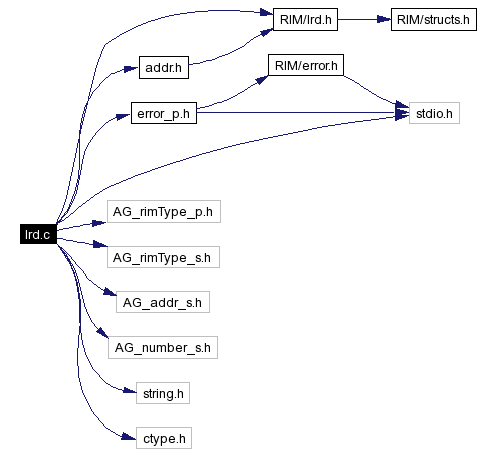
#include "RIM/lrd.h"
#include "addr.h"
#include "error_p.h"
#include "AG_rimType_p.h"
#include "AG_rimType_s.h"
#include "AG_addr_s.h"
#include "AG_number_s.h"
#include <stdio.h>
#include <string.h>
#include <ctype.h>
Include dependency graph for lrd.c:
Functions | |
| unsigned | RIM_nTypes (void) |
| Return the number of component types within the LAT register description. | |
| RIM_type | RIM_lookupType (const char *string) |
| Hunt through the list of component types and return the index of the input string. | |
| unsigned | RIM_nameType (char *string, RIM_type type) |
| Place the four character string describing this type into name. | |
| int | RIM_compareType (const char *string, RIM_type type) |
| Compare string with the name of type. | |
| unsigned | RIM_getAddrRng (const char *string, RIM_addr *addr) |
| Finds the address range associated with the type identifed by the string. | |
| unsigned | RIM_getIndex (const RIM_addr *addr, unsigned *index, RIM_type type) |
| Convert hierarchical bit addressing to flat addressing. | |
| unsigned | RIM_getAddress (RIM_addr *addr, unsigned index, RIM_type type) |
| Convert hierarchical bit addressing to flat addressing. | |
| void | RIM_layerLow (const Layer_addr *layer, TEM_addr *tem) |
| Convert the conceptual layer addressing of a TFE to the hierarchical form used to communicate with the LAT. | |
| void | RIM_layerHigh (const Layer_addr *layer, TEM_addr *tem) |
| Convert the conceptual layer addressing of a TFE to the hierarchical form used to communicate with the LAT. | |
| unsigned | RIM_getLayerID (char sign, char xy, char index, unsigned *layer) |
| Take three characters and convert them to a layer ID. | |
| unsigned | RIM_getLayerName (unsigned layer, char *sign, char *xy, char *index) |
| Get the characters of the layer name from the layer ID. | |
Variables | |
| static const char | tkr_layer [2][2][9] |
| Lookup table converting layer information to an index. | |
| static const char | tcc_lkup [4][2] |
| Gives the TCC ID for a given "end" of the requested layer. | |
|
||||||||||||
|
Compare string with the name of type.
|
|
||||||||||||||||
|
Convert hierarchical bit addressing to flat addressing.
|
|
||||||||||||
|
Finds the address range associated with the type identifed by the string.
|
|
||||||||||||||||
|
Convert hierarchical bit addressing to flat addressing.
|
|
||||||||||||||||||||
|
Take three characters and convert them to a layer ID.
|
|
||||||||||||||||||||
|
Get the characters of the layer name from the layer ID.
|
|
||||||||||||
|
Convert the conceptual layer addressing of a TFE to the hierarchical form used to communicate with the LAT.
|
|
||||||||||||
|
Convert the conceptual layer addressing of a TFE to the hierarchical form used to communicate with the LAT.
|
|
|
Hunt through the list of component types and return the index of the input string.
|
|
||||||||||||
|
Place the four character string describing this type into name.
|
|
|
Return the number of component types within the LAT register description.
|
|
|
Initial value: { {0, 1},
{3, 2},
{6, 7},
{5, 4} }
Since the pattern is repeating, take the layer index modulo 4 as the first index to the table and 0 for low or 1 for high as the second index to the table. |
|
|
Initial value: { { { 0, 4, 8, 12, 16, 20, 24, 28, 32 },
{ 1, 5, 9, 13, 17, 21, 25, 29, 33 }, },
{ { 3, 7, 11, 15, 19, 23, 27, 31, 35 },
{ 2, 6, 10, 14, 18, 22, 26, 30, 34 } } }
|
 1.4.4
1.4.4